By Rinki Pandey December 3, 2025
Merchants today are negotiating one of the most challenging cost situations in decades, and payment processing fees have quietly become one of the major drivers of decreasing margins. For years, card networks, banks, and processors have raised interchange and assessment fees while businesses absorbed the expense without any real opportunity to negotiate.
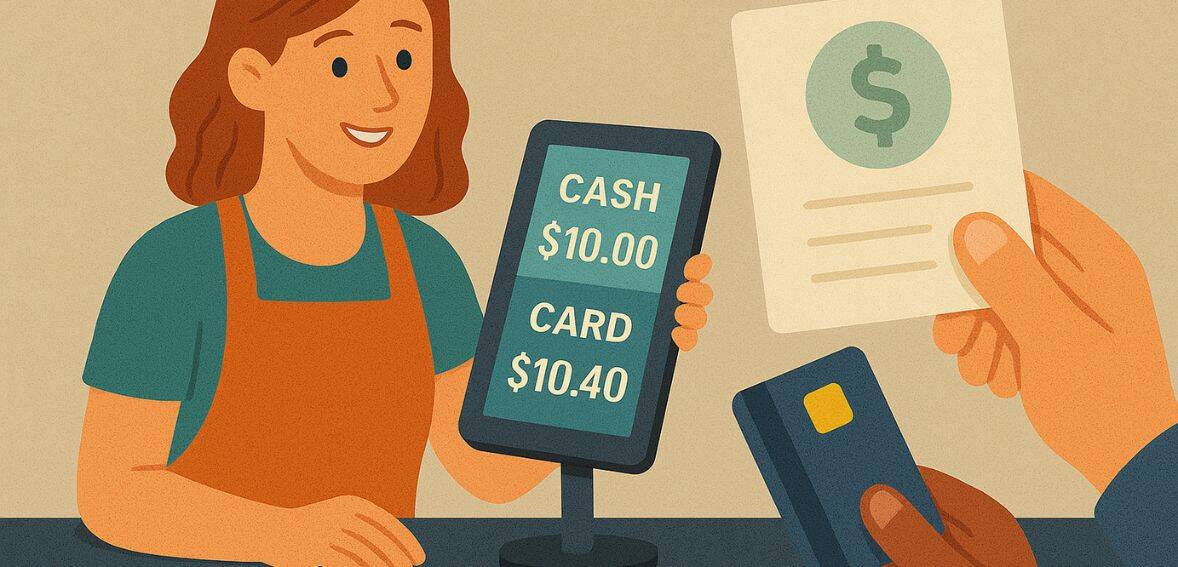
Dual pricing has turned into a practical way for merchants to separate the price of an item from the cost of taking a card, giving customers an upfront choice. Instead of increasing costs across the board, businesses can provide a cheaper cash price and standard card pricing, allowing each consumer to choose how they wish to pay.
More retailers, restaurants, and service businesses are adopting this setup because it fits the economic pressure they’re facing and helps them stay honest about pricing while protecting their margins.
Shifting How Companies Manage Processing Expenses

Dual pricing substantially affects how firms approach card processing fees. Regardless of the number of clients who made card payments, a business was responsible for paying those costs under the previous system. The more cards used, the greater the operational costs grew. By guaranteeing that the card price covers the cost of acceptance, dual pricing eliminates this financial uncertainty.
This gives a steadier and more predictable margin. When customers pay with cash, the business earns immediate savings since processing fees are eliminated. Because the price covers that expense, the firm is protected when customers use cards. Business owners can no longer feel as though they are losing money with each swipe due to this new arrangement.
Instead, they gain confidence knowing their payment model is financially balanced. Over time, dual pricing helps businesses avoid excessive price increases while still maintaining profitability. It introduces a fair system where card convenience is paid for transparently rather than silently. Many merchants explore strategies to lower processing fees as part of improving margins, especially when card costs continue to rise.
Understanding the Dual Pricing Model
Dual pricing, at its essence, is simple. It allows merchants to display two separate prices: a higher price for credit card payments and a reduced price for cash or debit purchases. Unlike standard cash discount or surcharge programs, dual pricing frames the difference as an option shown plainly to customers at checkout.
The customer is informed up front that using a card will result in a higher fee because processing card transactions is more expensive for the firm. The retailer separates the payment cost from the cost of the product rather than concealing or covertly absorbing processing expenses. Customers simply pick the option they prefer, which makes the whole process feel more open and fairer.
Why Clients Respond Well to Cash Discounts

Customers’ perceptions of discounts vs fees are one of the psychological benefits of dual pricing. A customer feels rewarded when they notice that purchasing with cash results in a lesser price. In contrast, adding extra costs to card payments can feel like a penalty. This minor psychological difference greatly affects customer reactions.
Positive reinforcement is often preferred by customers, and a cash discount shows gratitude for selecting a less expensive payment option. This framing helps guarantee customers don’t feel punished for utilizing cards. Instead, they recognize that the corporation is merely presenting them options. Early adopters of dual pricing say that the vast majority of clients respond positively once they grasp the goal.
Service industries that rely heavily on customer satisfaction—such as restaurants, cafes, salons, and local shops—benefit from the friendly tone of dual pricing. It supports strong customer relationships while also protecting business profitability. Many payment providers now offer specialized dual pricing services to help merchants implement transparent cash/ card pricing easily and compliantly.
Increased Storewide Financial Predictability
Budgeting becomes significantly easier for shops once they utilize dual pricing because they minimize the unpredictable swings created by fluctuating card usage. Under the former approach, a month with more credit card payments meant higher processing fees, which could threaten profit margins without warning.
The financial equation is altered by dual pricing. If clients continue using cards, the card price assures the business recovers the processing expense. The company gains from lower costs if more clients choose to pay with cash in order to save money. Either scenario maintains margins steady and predictable. Merchants are able to more precisely forecast revenue, pay bills, and plan investments because to this steadiness.
Businesses prosper when expenses remain under control, and dual pricing affords that control in a way traditional pricing systems never could. Many merchants consider this predictability one of the major long-term benefits, especially in businesses where even slight cost rises can have huge financial effects.
The Importance of Clear Communication

Implementing dual pricing involves deliberate communication to ensure clients understand the pricing changes. Clear signage at the entryway, menu, counter, or checkout helps guests know what to expect before buying or shopping. When customers see the reason early, they avoid feeling startled later.
Additionally, staff training is crucial. Employees should be able to explain dual pricing in a simple sentence that doesn’t sound defensive or convoluted. When staff clearly characterize the approach as a reasonable response to growing card fees, customers often accept it without difficulty.
Businesses that take the time to establish their communication strategy frequently have smooth transitions with minimum uncertainty. Instead, then using long explanations, the most effective implementations use simple language and obvious reminders. Once customers grasp the purpose—maintaining fair pricing and offering choice—they often appreciate the honesty and adaptability built into the dual pricing approach.
How Dual Pricing Enhances Brand Transparency
Many shops have noticed that dual pricing actually helps their brand image when applied appropriately. Today’s consumers place nearly equal value on transparency as they do on quality and service. They value businesses that freely discuss why pricing are established the way they are.
Dual pricing promotes honesty in a world where prices are sometimes concealed or buried under fine print. By addressing the cost difference openly, businesses show integrity and respect for their customers’ comprehension. Customers who appreciate supporting small firms under financial strain are especially loyal as a result of this honesty.
Dual pricing becomes an extension of the brand identity for retailers who value authenticity. It enables them to keep their prices reasonable, give honest explanations for growing expenses, and keep building confidence. When customers see that a business is willing to be straightforward instead of quietly raising prices, many view the company more favourably, strengthening the long-term customer relationship.
When Dual Pricing May Not Be Ideal
Dual pricing is not a one-size-fits-all approach, even while it works for many organizations. Because they want to offer seamless simplicity, several luxury or high-end brands desire a consistent price experience. For many businesses, having two pricing can contradict with their extravagant image.
Additionally, firms whose clients almost exclusively utilize cards may discover that the cash discount accomplishes little to influence payment behaviour. While dual pricing can still cover card charges in such circumstances, it may not give the full value some companies expect. It is crucial to understand the customer base.
A business must examine how price-sensitive its clients are, how many still carry cash, and how their brand identity aligns with dual pricing. However, companies frequently use dual pricing just to safeguard their profit margins, especially in card-heavy situations.
Evaluating Whether Dual Pricing Is the Right Fit

Before converting to dual pricing, retailers often evaluate several months of payment history to learn how card fees effect their finances. Reviewing card volume, cash transactions, and average ticket sizes can determine if dual pricing might deliver meaningful benefits. Many companies find that card fees take up a higher portion of their income than they expected.
This understanding typically pushes them to implement dual pricing as a strategy to stabilize profitability. Other firms realize that their card usage is extraordinarily high, yet the financial relief from dual pricing is still large because the card fee offsets the processing cost. Evaluating this data allows merchants to make informed judgments rather than guessing. With clear numbers, the decision becomes lot easier and more strategic.
Determining the Cash Discount and Card Price Structure
Determining the amount of the cash discount becomes crucial whenever a company chooses to use dual pricing. Some shops want to preserve existing prices and merely introduce a cash discount that represents the average cost of card acceptance. This strategy is popular since it feels less disruptive to returning customers.
Others choose to take their present prices as the cash price and raise the card price correspondingly. The decision depends on how the business intends to communicate the change. Many find it simpler to maintain the base card charge at the usual level and let clients figure out the cash savings on their own. This strategy decreases the perception of a price increase and fosters favourable emotions.
Whatever approach the merchant chooses, the pricing difference must accurately reflect processing costs so the structure remains sustainable. Properly setting these prices ensures fairness and long-term success.
Monitoring Performance After Implementation
Businesses frequently keep a careful eye on their outcomes after using dual pricing to examine how client payment behaviour changes. Some merchants observe a small rise in cash payments as price-sensitive clients choose the lower pricing.
Others notice that most customers continue using cards, however margins rise because the card price covers processing fees. Feedback from clients also helps enhance the strategy. If customers express misunderstanding, retailers often change signs or worker communication. If consumers value the cash discount, the company might make it more obvious.
Over several months, patterns emerge that indicate how dual pricing effects financial health, customer satisfaction, and daily operations. Merchants that evaluate these trends can fine-tune their approach and assure the long-term viability of the program. Most find that even if only a small share of customers moves to cash, the overall improvement in margins makes dual pricing worthwhile.
Future Growth of Dual Pricing in Retail and Services
Looking ahead, dual pricing is expected to grow even more widespread. With card fees continuing to grow and regulatory pressure mounting, retailers are exploring models that allow them to retain margins without passing broad price hikes onto customers.
Dual pricing accords with this necessity. It provides fairness, choice, and transparency. It helps customers to recognize the cost of convenience while giving retailers a method to remain competitive. As more retailers embrace the strategy, customer familiarity builds, decreasing friction further.
The Core Reasons Merchants Switch
Ultimately, shops are adopting dual pricing for a simple reason: it works. It protects margins, improves cash flow, provides pricing transparency, and distributes expenses more equally.
It helps organizations be resilient in a fast-shifting financial market. And perhaps most crucially, it gives merchants back a sense of agency in a system long dominated by entities considerably larger than them. Dual pricing is not a trend—it is a recalibration of fairness.
Key Takeaways That Reflect Real Merchant Experiences
- Many merchants are shifting to dual pricing because rising processing fees have made traditional pricing unsustainable.
- Dual pricing provides a clear way to separate the product cost from payment-method expenses, giving customers two straightforward options.
- This strategy is now used by companies in retail, food service, salons, clinics, and trades to maintain margins without increasing all prices.
- When pricing differences are disclosed up front with simple, truthful explanations, customers usually react favourably.
- The model is successful because it mimics the payment flexibility found in government services, hotels, and airlines.
- Cash-paying customers benefit from lower pricing, while card users cover the actual cost of their chosen method.
- Particularly in light of erratic interchange increases, merchants value the stability dual pricing provides.
- Clear signage, trained staff, and consistent labelling make the transition smooth and help avoid customer confusion.
Conclusion: Why Dual Pricing Will Continue Growing
Dual pricing is effective because it provides merchants with financial security, fairness, and clarity without undermining consumer confidence. By publicly offering a card pricing and a cash price, businesses communicate honestly about the cost of card acceptance while giving customers the power to pick.
Dual pricing offers a viable solution as financial strains keep growing and card costs don’t appear to be abating. Customers appreciate the transparency, merchants appreciate the stability, and both sides gain from the simplicity of the business.
Because of this balance, dual pricing has evolved from a specialized strategy primarily utilized at gas stations to a widely employed tactic in the retail, dining, services, and professional sectors. It sustains profitability, promotes affordability, and offers merchants flexibility. In a rapidly evolving financial landscape, dual pricing stands as a practical, responsible, and customer-friendly solution that is likely to continue expanding for years to come.
FAQs
How does dual pricing differ from surcharging?
Dual pricing shows two upfront prices, while surcharging adds a fee at checkout. Dual pricing is more transparent and customer-friendly.
Does dual pricing reduce merchant processing fees entirely?
Yes. When customers pay with cards at the card price, that difference covers the merchant’s processing cost, protecting margins.
Can dual pricing improve cash flow?
Absolutely. Cash transactions avoid processing delays and fees, giving merchants immediate, full payment.
What businesses benefit the most from dual pricing?
Restaurants, retail shops, salons, auto-services, and small local businesses with high card usage see the fastest impact.
Do POS systems automatically calculate dual pricing?
Modern POS solutions can display both prices, apply cash discounts, and ensure compliance automatically.